Inside the Box: How Radio and Cassette Became One Portable Machine
What changed everyday listening most was not radio by itself or cassette by itself, but the moment both got bolted into one portable box—and you can see the whole idea in that wide face with two speakers, a cassette deck in the middle, and an antenna pulling upward like it wants to catch the world.
Önemli noktaları göster
- The boombox mattered because it combined radio, cassette recording, replay, and portability in one device.
- It changed behavior by letting people hear a song on the radio, record it, and play it back later somewhere else.
- Its antenna, cassette deck, handle, and dual speakers each supported a more flexible and social way of listening.
-
- Unlike home stereos, boomboxes moved music beyond a single room and into parks, garages, bedrooms, and streets.
- This freedom came with trade-offs, including heavy weight, high battery use, and significant cost.
- The boombox solved a different problem than the Walkman by enabling shared playback and easy switching between broadcast and personal music.
- Its real innovation was reducing everyday friction by collapsing separate listening tasks into one portable machine.
A lot of people remember the boombox as big, flashy, maybe a little funny now. Fair enough. But the reason it mattered was simpler and better: it collapsed a bunch of separate jobs into one machine you could actually pick up by the handle and carry into the rest of your day.
It Was Never Just About Looking Cool
The compact cassette arrived first. Philips introduced it in 1963, and for a while that little tape was mostly a convenient recording format, useful because it was smaller and easier to handle than earlier tape systems. Radio, meanwhile, was still the quick way to hear what was out there right now.
Then the late 1970s and 1980s brought the box that put those habits together. A boombox let you tune in a station, hear a song when it aired, record it onto a cassette, and then replay it later somewhere else without moving to another room or touching another machine. That is a much bigger change in behavior than “old stereo, but portable” makes it sound.
Try a little self-check. Imagine three separate tasks: hearing a song live on the radio, saving it, and replaying it later at a park, on a stoop, in a garage, or in your bedroom. Before a radio-cassette box combined them, how many devices would that take, and how often would those devices live in the same place?
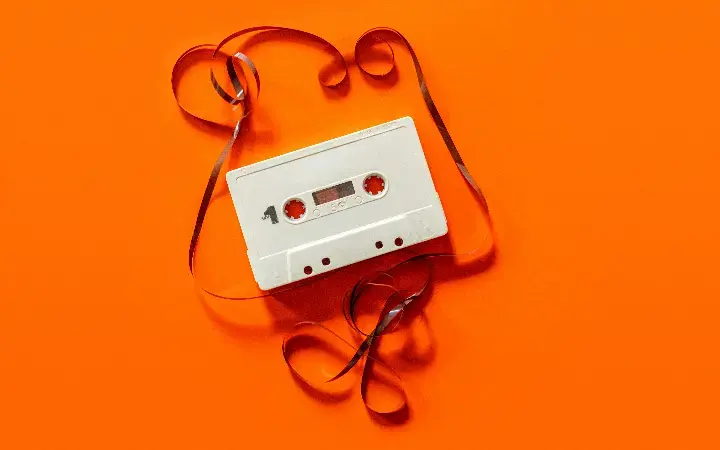
Now look at the parts the way people used them. The antenna meant you could catch a signal where there was no home stereo waiting. The cassette deck meant the station did not get the final word; if you liked what you heard, you could keep it. The dual speakers spread the sound wide enough that music became something a couple of friends, or a whole little knot of people, could hear together.
And there was one more trick people forget because it feels normal now: the instant switch. One second the machine belonged to the broadcaster. The next second you hit the controls and it belonged to you. Radio caught the moment. Tape kept it. The handle moved it. The speakers shared it.
The Freedom Had Weight—Literally
Of course, this was not magic. It was hardware, and hardware asks something from your arms and your wallet. A real boombox could be hefty, and that heft was part of the bargain: not tiny convenience, but portable enough to move listening out of its usual slot in the house.
Smithsonian has noted that some 1980s boomboxes could run on up to 20 D-cell batteries. That detail matters because it tells you what “portable” meant then. True mobility existed, but it came with bulk, battery expense, and the kind of weight that made you notice the handle digging into your hand after a while.
Still, people accepted that burden because the trade was worth it. You were no longer borrowing the family radio in the kitchen or waiting until you got back to the room with the tape deck. The machine carried a little territory of choice with it.
Then comes the part that really makes the old box click into place. You pull up the antenna. You tune. You hover by the controls because the DJ is talking over the intro again. You press record. And then you hear that springy clack of the cassette door snapping shut.
That sound is the whole story in miniature. What was floating through the air as a broadcast is now becoming something you can replay, lend, stash by the bed, or carry outside. Not perfect control, maybe, but much more control than radio alone ever gave an ordinary listener.
The Cabinet Wasn’t Clutter After All
Go back to that boombox sitting on the cabinet among other old radios and electronics. At first, all those extra boxes can look like background, just the usual pile-up of outdated gear. Halfway through the story, though, you realize they are the story.
Each separate object points to an old limit. One box receives. Another records. Another stays plugged into one room. Another is personal but not shareable. What looked like clutter is really a map of friction: listening split across separate devices, separate rooms, and separate moments.
That is why the boombox landed so hard in everyday life. The leap was not that it produced some impossible new sound quality. The leap was that it collapsed friction. One machine could receive a broadcast, record it, replay it, and carry that choice somewhere else.
Library of Congress writing on cassettes often emphasizes how the format supported home recording and personal compilation, while broader broadcast histories keep reminding us how radio gave listeners access to shared public sound in real time. The boombox mattered because it made those two strengths live together in one object a person could lift with one hand, even if the hand complained a bit.
Wasn’t the Walkman the Real Revolution?
That is the fair objection, and the answer is: yes, but for a different problem. Sony’s Walkman, introduced in 1979, changed private listening in a huge way. It made music intimate, portable, and tucked right against your ears.
The boombox did something else. It made selection, recording, and public playback happen in one movable object. If the Walkman was about carrying your own bubble, the boombox was about carrying a shared sound space that could switch from whatever the station gave you to whatever tape you had ready.
So this was not freedom for everyone—these machines were heavy, battery-hungry, and often expensive. But within those limits, they changed the feel of listening. Music became less tied to the room where the equipment lived and less tied to the station schedule alone.
Why This Old Box Still Makes Sense
Seen that way, the boombox on the cabinet stops being dead tech and starts looking like a machine built around a very current desire: to choose what we hear, keep it, and bring it with us. That is why people responded to it so strongly. It solved a plain human annoyance that earlier gadgets left scattered all over the house.
If you want one useful thought to carry away, try looking at old devices not by asking, “What did it play?” but “What everyday friction did it remove?” The answer is often more interesting than the format name on the front panel.
The boombox felt revolutionary not because it was sleek or delicate—it was neither—but because it let ordinary people bring more of their own soundtrack into more of life.