Inside the Board That Shapes What You Hear Before a Show or Recording
A good mixing console is doing its job best when you barely notice it at all. Most people assume the board is there to make everything louder, but its real work is deciding what gets through, where it goes, and what trouble gets stopped before the room ever hears it. If a singer’s mic is about to feed back, or a keyboard is suddenly too sharp, or the drummer can’t hear the count-in, the board is often where that problem gets caught early and quietly.
Önemli noktaları göster
- A mixing console combines, adjusts, routes, and monitors incoming audio signals before they reach speakers or recording devices.
- Gain sets the incoming signal strength, while the fader controls how much of that prepared signal enters the final mix.
- EQ helps shape tone so sounds stay clear and do not pile on top of each other in a muddy mix.
-
- Routing and auxiliary sends let one source feed mains, monitors, recordings, livestreams, or effects without affecting every destination equally.
- Mute is a fast control that prevents hot mics, cable noise, and other small live sound problems from becoming public distractions.
- Good live mixing focuses less on loudness and more on intelligibility, separation, and preventing issues like feedback.
- The best console work often goes unnoticed because it keeps a performance sounding natural, balanced, and free of obvious problems.
In plain terms, a mixing console takes many incoming audio signals and lets an engineer combine, route, adjust, and monitor them before they hit speakers or recording devices. That is how Yamaha explains the basic job in its live sound guides, and it is a clean definition because it covers the whole thing without the usual fog. The board is less a magic box than a traffic desk with very fast hands.
And before we get too cozy with any one layout: this doesn’t work the same way on every board. Analog, digital, studio, and live consoles share the same logic, but the knobs, screens, buttons, and shortcuts can look very different. Same game, different furniture.
So what are all those faders actually controlling?
Take one singer’s microphone. That signal comes into an input on one channel strip, which is just the board’s lane for that one source. From there, the engineer usually sets gain first, and this is where people mix things up.
Gain is not the same thing as the fader. Gain sets how strong the microphone signal is when it first enters the console. If the gain is too low, the voice arrives weak and noisy; if it is too high, the signal can distort or push the system toward feedback before the channel fader even becomes useful.
The fader then controls how much of that already-prepared signal goes into the mix. Think of gain as getting the ingredient into the right range, and the fader as deciding how much of that ingredient goes into the dish. Engineers do not love cooking metaphors, but this one earns its keep.
After gain and level, the board can shape the sound with EQ. Maybe the voice is muddy, so some low-mid frequency gets trimmed. Maybe consonants are hard to understand, so a little presence gets added. The point is not to make everything flashy. The point is to stop sounds from piling on top of each other until nobody can tell the words from the guitar.
Then comes routing. The signal might go to the main speakers for the audience. It might also get sent to floor wedges or in-ear monitors so the singer can hear themselves. It might be sent to a recording feed, a livestream mix, or held out of one destination while staying in another. This is where the board starts to feel less like a volume machine and more like a set of permissions.
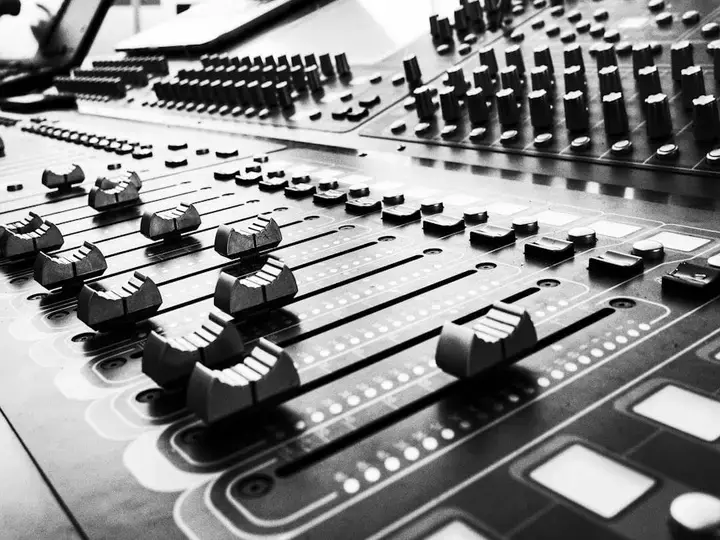
And yes, there is also mute, which sounds simple until you need it fast. Mute keeps a signal from passing to a destination, which can save a room from a hot mic, a cable crackle, or a musician tuning loudly at exactly the wrong time. A lot of live audio competence is not dramatic. It is stopping small disasters from becoming public.
If you want the whole trip in one pass, here it is: the mic enters the channel, gain puts it in a usable range, EQ shapes its tone, the fader sets its level in the mix, sends route some of it to monitors or effects, pan places it left or right if the system uses stereo, and the mute button can stop it cold. The board trims, routes, mutes, pans, sends, catches. That is the work.
Quick self-check. Imagine one microphone feeding a singer. If the gain is too hot, the sound may distort or flirt with feedback. If the channel is muted, the singer can be talking and the audience hears nothing. If the signal is sent to monitors but not the main speakers, the performer hears the vocal while the room does not. Once that clicks, the console stops looking mysterious and starts looking logical.
Here is the shift most people miss: the board is not mainly about making sound bigger. It is about deciding what does and does not get allowed into the room. Loud is easy. Clear is the hard part.
Ever noticed how silence before a show can feel louder than the music?
The quiet part is where the board tells on itself
There is a moment at soundcheck when one finger rests on a mute button, the room sits still, and you hear the soft click followed by the low electrical hum waiting beneath the space. That little hush tells you more about live sound than a wall of blinking LEDs ever will. Control is felt most strongly in what never happens next.
A clean show often feels effortless because the ugly options were blocked upstream. The ringing feedback never blooms. The lectern mic does not thunder when somebody bumps it. The backing vocal does not vanish just because the guitarist asked for more of it in a monitor. All those non-events come from tiny choices on the board.
A real-world example is monitor mixing, which can make or break a performance. A singer may need more vocal and less guitar in their wedge, while the drummer wants more bass and click. Those changes should help the musicians without wrecking the audience mix, so the console uses auxiliary sends to build separate monitor feeds. One source, multiple destinations, different needs.
Feedback risk lives in the same neighborhood. The National Institute for Occupational Safety and Health describes feedback in plain terms as the loop that happens when a microphone picks up sound from a loudspeaker and re-amplifies it. On a live console, avoiding that means sensible gain, careful speaker and mic placement, and often some EQ cuts where the system wants to ring. Again: not glamour, just prevention.
Why “just make it louder” is the wrong idea
People often think the board’s main purpose is loudness or polish. Fair enough. Faders go up, sound gets bigger, crowd happy. But loudness by itself is the easy part, and sometimes the worst part.
What takes judgment is intelligibility, separation, and control under pressure. If a vocal disappears when the band kicks in, the fix is rarely “push everything harder.” It may be resetting gain, carving out clashing frequencies, changing the monitor send that is encouraging feedback, or muting a source that is leaking noise into every open mic. That is why a solid engineer can make a modest system sound organized, while a sloppy one can make an expensive rig sound like soup.
Studio boards and live boards may differ in workflow, and digital consoles can hide a lot of this behind layers and screens, but the core logic stays put. Signal comes in. It gets prepared, balanced, shaped, and directed. Problems are isolated before they spread. Same dam, different gates.
If you ever stand near a console during soundcheck, watch what gets touched when something is wrong. Not always the big fader. Often it is the gain trim, the EQ, the aux send, the mute, the routing assignment. The visible move may be tiny, but the audible result can be the difference between “too loud” and “I can finally hear the song.”
What to notice next time the room sounds easy
The best live sound usually feels natural enough that nobody applauds the board, and that is exactly the point. Somebody made hundreds of little choices so the singer stayed present, the band stayed balanced, and the room never tipped into chaos. Invisible hands, mostly.
So next time a concert, church service, play, or recording session sounds smooth, spare a thought for the quiet work between microphone and speaker. The console is where signals get permission, discipline, and sometimes a firm no. That is the part worth noticing.
Once you see it that way, the soundboard stops being a wall of mystery and starts looking like what it is: a steady pair of hands in the dark.