Why Does It Take a Century to Determine the Universe's Speed?
Over a century after Edwin Hubble's discovery of the universe's expansion, scientists continue to debate the expansion rate. Known as the Hubble Constant, this rate is crucial for understanding everything from the universe's age to the fate of all galaxies. Yet despite technological and theoretical advancements, cosmologists face an intriguing dilemma: various measurement methods offer differing answers for the constant. This ongoing disagreement isn't just about numbers—it might hint at unknown physics or a flaw in our cosmic understanding.
Önemli noktaları göster
- Edwin Hubble discovered the universe's expansion and connected galaxy distance to their recession speed.
- There is significant variance in determining the Hubble Constant's value using different methods.
- Local measurement methods rely on celestial objects like Cepheids and supernovae.
-
- The cosmic microwave background method uses satellite data from Planck.
- The tension in the Hubble Constant values could point to new physics or methodological errors.
- Theories like early dark energy and modified gravity are proposed to explain the discrepancy.
- Modern space tools like the James Webb Telescope aim to solve this long-standing mystery.
Origins: Hubble's Groundbreaking Discovery
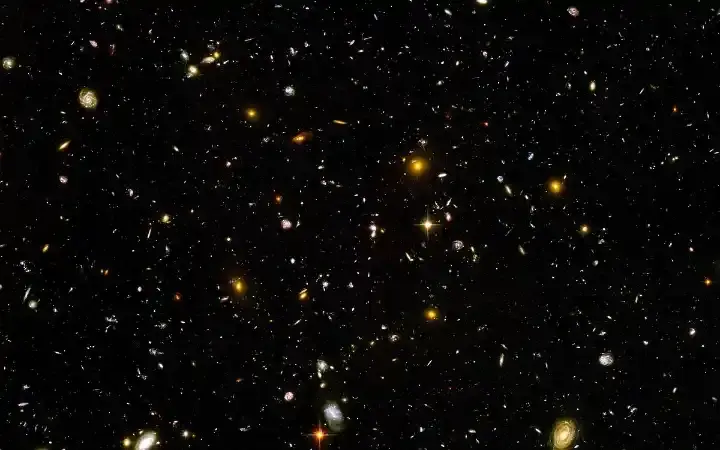
In the 1920s, astronomer Edwin Hubble observed that distant galaxies are moving away from us, and the farther a galaxy is, the faster it seems to move. This relationship, now known as Hubble's Law, indicated the expansion of space itself and introduced the concept of the Hubble Constant: the rate of galaxy separation per unit distance in the universe. Early estimates of the Hubble Constant ranged from 50 to 500 kilometers per second per megaparsec (km/s/Mpc), reflecting the technical limits of optical telescopes at the time and the challenges of accurately measuring astronomical distances. This wide range also mirrored the nascent stage of observational cosmology, full of challenges regarding understanding galaxies' nature and their true positions in space. Over the decades, with tools like the Hubble Space Telescope and more precise calibrations using Cepheid variable stars and supernovae, the uncertainty has considerably narrowed. However, even with 21st-century tools and sensitive satellite missions, we still lack consensus on a precise value for the universe's expansion speed.
Two Methods, Two Answers
Today, there are two main approaches to measuring the Hubble Constant, and surprisingly, they produce conflicting results.
· Method 1: Local Measurements
Astronomers use the "cosmic distance ladder"—a stepwise approach relying on well-understood celestial objects, like Cepheid variables and Type Ia supernovae, to measure distances to far-away galaxies. By tracking these galaxies' velocities and distances, researchers can estimate the local expansion rate. The SH0ES project (Supernovae, H0, for the Equation of State), led by Nobel laureate Adam Riess, uses this method and consistently finds a value of about 73 km/s/Mpc.
· Method 2: Cosmic Microwave Background (CMB)
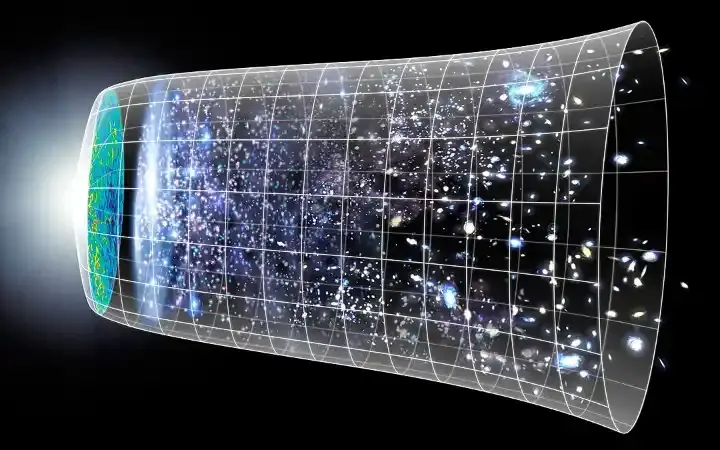
This approach looks much further back in time. Satellites like Planck analyze the CMB—the faint glow following the Big Bang. By modeling how tiny temperature fluctuations in the CMB evolved into today's universe, scientists can indirectly infer the Hubble Constant. Planck's data suggests a notably lower value, around 67.4 km/s/Mpc. While the difference might seem small, it significantly exceeds the margin of error. These methods describe the same universe but disagree on its expansion speed. This discrepancy, dubbed "Hubble tension," persists, intensifying both excitement and concern in the astrophysical community.
Theories, Tensions, and Unknown Physics
Why can't we pin it down? The current tension might simply arise from methodological errors—perhaps an unknown bias in measuring distances or brightness. But as methods evolve, the likelihood of error decreases. Here lies the intrigue. Some scientists suggest the tension points to new physics—an update or extension of the standard cosmological model. Ideas include:
· Early Dark Energy: A brief burst of dark energy immediately following the Big Bang might have affected the universe's initial expansion speed, altering the inferred Hubble Constant.
· Neutrinos or Exotic Particles: Introducing "dark radiation" via unknown particles could change early universe evolution.
· Modified Gravity: Perhaps Einstein's General Relativity doesn't fully explain gravity on cosmic scales.
In short, the longer this tension lasts, the more it challenges our cherished cosmological models. This complexity manifests how deceptively challenging measuring something as "simple" as the universe's expansion speed can be from within it, looking outward with imperfect tools.
The Way Forward: A New Era of Measurement
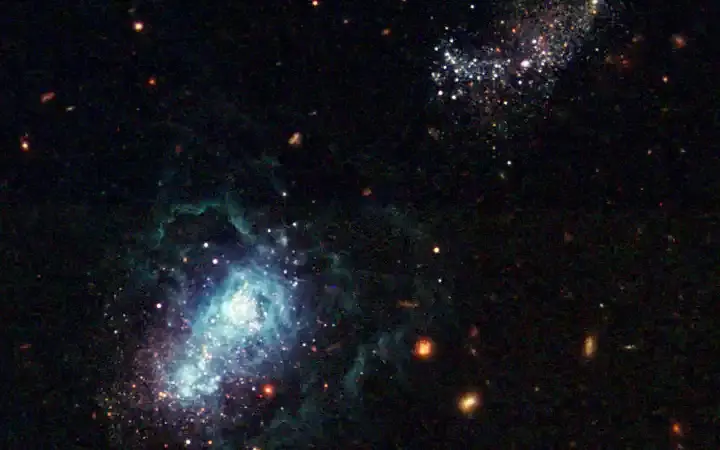
Despite the uncertainty, the quest to resolve the Hubble puzzle is driving astronomy into a golden age of innovation and rapid technological advancement. New tools and missions aim to finally break the impasse, revealing the nature of the universe at unprecedented levels:
· The James Webb Space Telescope offers ultra-precise data on Cepheid stars and more distant galaxies, helping to recalibrate the "cosmic ladder" with prior unattainable precision.
· The Vera Rubin Observatory will collect an unparalleled amount of data on supernovae, providing scientists with a deep temporal window on the universe's expansion history.
· The European Space Agency's Euclid mission and NASA's Nancy Grace Roman Space Telescope are designed to explore dark energy and the universe's structure through a new lens, potentially reshaping our understanding of matter and energy interactions on a cosmic level.
Some researchers are even turning to gravitational wave astronomy, an emerging field that enables us to "listen" to the universe. By analyzing "standard sirens"—gravitational wave signals from neutron star collisions—they hope to achieve highly precise, independent measurements of cosmic distances and expansion rates, without relying on traditional tools. Each of these approaches holds promising outcomes. With every new high-definition observation, we are drawing nearer to either closing the gap between measurements—or to unlocking deeper questions that might entirely redefine our cosmic map.