Chinese Laser Breaks Spy Dreams, Reads Sesame-Sized Letters from a Mile Away
China has unveiled laser technology that can read tiny letters the size of sesame seeds from about a mile away. Developed by researchers at the University of Science and Technology of China, the system marks a major advance in optical imaging and surveillance. By using intensity interferometry — a technique long used in astronomy — scientists have achieved a new level of accuracy in long-distance text recognition.
The Science Behind the Laser Technology
The system is based on intensity interferometry, a method originally developed to measure the size of distant stars. Instead of relying on direct imaging, intensity interferometry analyzes fluctuations in light intensity detected by separate sensors. This approach helps researchers overcome atmospheric distortions that normally degrade long-range optical images.
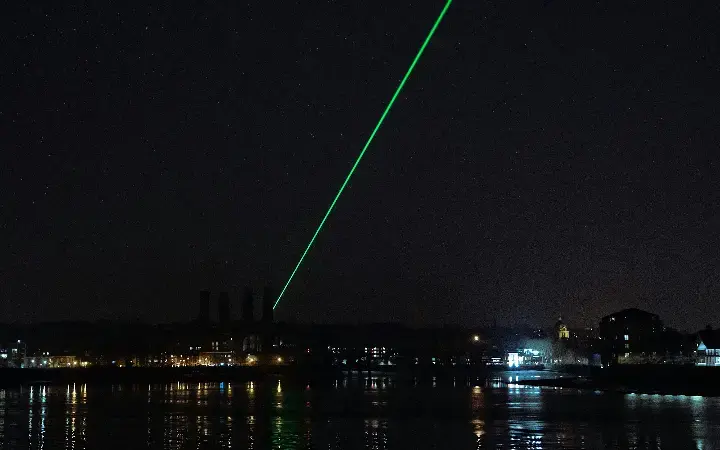
In practice, the setup illuminates a target with laser beams while a pair of telescopes records the intensity of reflected and scattered light. Rather than capturing the object’s direct light, the system measures how the laser light scatters in the surrounding space. By comparing intensity fluctuations recorded at each telescope, researchers can reconstruct a detailed image of the target.
Using this method, the team identified letters just one millimeter wide — smaller than the width of a pencil — by illuminating them from 0.85 miles away. The researchers say this represents a roughly 14-fold improvement in spatial resolution compared with conventional optical systems. The precision is notable because typical optical devices often struggle with atmospheric interference over long distances. By refining the system’s calibration, the team improved its accuracy so even very small features can be resolved.
Potential Applications and Implications
The ability to read fine print from such distances opens many potential applications in surveillance, security and scientific research. Governments and intelligence agencies could use the technology for covert operations, gathering information without physical proximity. Beyond espionage, the method could help identify space debris, improve satellite imaging and enhance remote sensing.
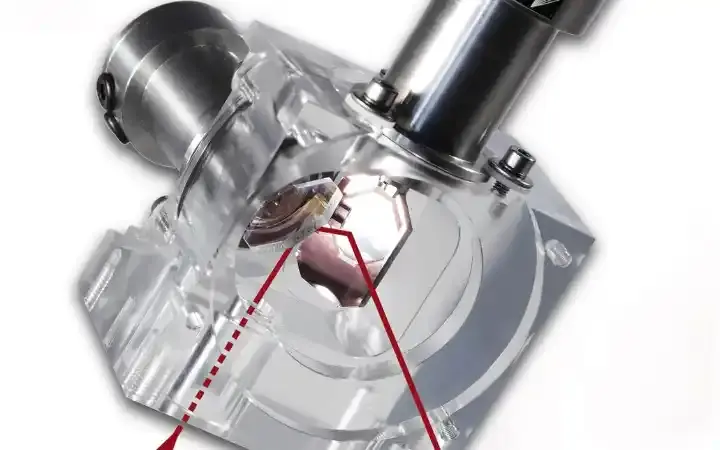
For example, manufacturers in nanotechnology or microelectronics might use laser-based imaging to inspect tiny components from a distance, reducing the need for invasive procedures or expensive microscopes. At the same time, the technology raises ethical concerns about privacy and surveillance. Privacy advocates warn it could enable mass observation without people’s knowledge.
The capacity to read documents remotely — without direct access — also raises questions about the future of encrypted communications and data security. Addressing these issues will require legal safeguards, ethical guidelines and international cooperation to promote responsible use as governments and organizations adopt the technology.
Advancements in Optical Imaging
This Chinese development is part of a wider push in high-resolution optical technology. One key advantage of intensity interferometry is its potential to exceed the diffraction limit, a basic constraint on optical resolution. Instead of building a single enormous telescope, researchers can use multiple receiving apertures spread over a distance to achieve comparable precision.
Combining the laser system with artificial intelligence could further improve performance. AI algorithms could enhance shape and text recognition, making the system more accurate at identifying objects. Researchers also expect future versions to incorporate adaptive optics to automatically correct for atmospheric turbulence, reducing environmental interference and improving practical usability.
Future Prospects and Challenges
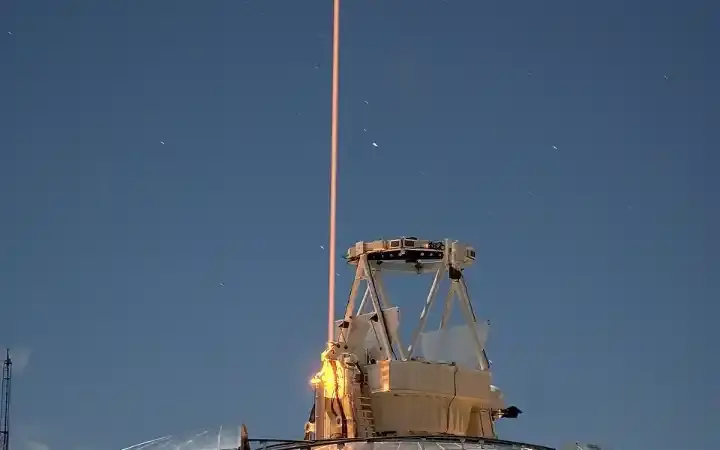
Despite the advance, significant challenges remain before the technology sees wide use. Weather conditions such as humidity and atmospheric turbulence still affect long-distance imaging accuracy, and researchers are working to make the system reliable across varying environments. Cost and scalability will also influence who can access the technology; military and intelligence users may adopt it sooner than commercial sectors.
As China continues to push the limits of photonic imaging, the global scientific community will watch closely. Whether applied to security, space exploration or medical imaging, the system has the potential to change how we observe distant objects. Researchers expect further improvements that could extend range and resolution, possibly allowing even smaller text to be read from greater distances.